
Krista Kellogg
November 5, 2026


Your top content affiliate just introduced hundreds of high-intent shoppers to your brand.
But because those shoppers spent two days researching and building buying confidence across conversational AI, traditional 24-hour last-click attribution registers their value at $0.
Sound familiar? It’s a quiet symptom of a seismic shift in consumer behavior. Across our community, performance teams are hitting the limits of tracking models built for a simpler, linear internet.
As zero-click AI overviews collapse the discovery phase and multi-touch consideration cycles lengthen, our industry faces an inflection point. We have a rare opportunity to rethink how we value touchpoints, and relieve the operational strain on the partnership teams quietly carrying the load.
To separate signal from noise amidst these shifts, Everflow hosted a series of live AMAs with experts across ecommerce, media, and technology.
Across every exchange, one truth was clear: winning in this next wave of affiliate marketing requires building AI authority, leaning into conversational product data, and capturing full-funnel intent. By unifying and automating attribution across these modern touchpoints, partnership leaders can step away from reactive reporting and step into what matters most: driving long-term, high-value growth.
Generative AI engines like ChatGPT, Claude, and Perplexity don’t generate brand and product recommendations in a vacuum. They constantly crawl trusted media outlets, authoritative editorial reviews, and domain-specific content across the open web. Generative Engine Optimization (GEO) ultimately relies on establishing digital trust and authoritative consensus long before a shopper reaches a checkout cart.
When we look beyond immediate lower-funnel transactions, we unlock a richer understanding of how discovery naturally functions in an AI-assisted ecosystem. As Linkby’s Chief Content Officer, Vanessa Lawrence, points out, Cost Per Click (CPC) models do far more than drive immediate clicks. They fairly compensate media partners for introducing audiences to new brands while building trust long before a purchase happens
This editorial footprint directly powers a brand’s AI visibility. When autonomous LLMs query the open web to fulfill user prompts, they look for sustained, trusted third-party validation. Lawrence’s colleague on the partnerships side, Sophie Toporoff, Senior Director, North America Partnerships at Linkby, emphasizes that AI engines don't evaluate immediate click behavior. Instead, they analyze whether a brand appears consistently within high-quality content across the web. Ultimately, a single great piece of editorial coverage becomes an enduring part of the story AI tells about a brand months into the future.
When expanding beyond lower-funnel CPA, Toporoff recommends allocating 20% to 30% of your partner budget toward top-of-funnel CPC placements. This creates the initial editorial authority and high-intent awareness needed to fuel downstream conversions, laying down machine-readable trust signals that human readers and AI crawlers alike can seamlessly track.
Consumer behavior is organically shifting away from traditional search links toward conversational answers, visual discovery, and agentic summaries. To stay visible in a zero-click world, brands are rethinking how they structure and distribute product information across external channels.
High-intent discovery rarely happens in an isolated browser tab anymore. Forward-thinking teams are finding success by connecting modern discovery nodes, ranging from visual platforms to digital media and performance Connected TV (CTV), into a unified affiliate framework rather than juggling disconnected operational silos.
As Vikki Danielson, Director of Affiliate Sales at tvScientific by Pinterest explains, pairing visual discovery with accountable media transforms how performance teams approach new channels. This allows teams to treat emerging formats as measurable growth engines rather than passive awareness plays.
For brands exploring multi-screen engagement, channels like CTV offer a clear blueprint for modern attribution. Danielson dispels the myth that streaming media is strictly reserved for upper-funnel branding. Using household-level attribution and IP tracking, advertisers can connect TV views directly to cross-device actions like mobile purchases or desktop signups. This proves even broad-reach channels deliver measurable performance.
As multi-screen adoption and conversational commerce accelerate simultaneously, underlying data architecture is stepping up to power both visual discovery and AI search. Jeff Segall, EVP - Revenue Operations at Shopnomix, highlights that as traditional search volumes drop and AI adoption picks up rapidly, brands operating across multiple markets must prioritize localized, SKU-level product feeds structured specifically for real-time AI retrieval.
To evaluate performance across conversational and pre-search inventory without risking existing revenue, Segall recommends shifting a 5% to 10% pilot budget out of legacy search channels to test conversion performance in AI-driven environments.
Once a brand becomes discoverable across these conversational and visual channels, the next strategic imperative is ensuring that high-intent traffic converts effortlessly rather than drifting away during extended research cycles.
Even when shoppers demonstrate clear buying intent during AI research, longer consideration cycles and instant price comparisons frequently lead to paused sessions. Most consumers don’t purchase on their first interaction. Instead, they validate, compare, and deliberate across multiple browser windows.
Chris Lettera, Partnerships Manager at Minty, breaks down this shift by noting that while social channels spark initial awareness, AI tools serve to validate buying decisions. AI discovery is naturally harder to track, as shoppers often query tools like ChatGPT and leave without converting. Solutions like Minty Recover step in when those shoppers reach a brand's site and leave without buying.
Connecting with modern, value-conscious shoppers involves placing context-aware offers directly within AI discovery environments while deploying thoughtful, non-intrusive on-site recovery mechanisms. As Lettera observes, for a budget-conscious consumer, a cashback incentive or verified discount acts as the essential permission they need to commit to the purchase.
To execute this effectively, proactive commerce relies on a full-funnel recovery loop: Minty Promote syndicates offers into LLMs for top-of-funnel discovery, Minty Prevent captures high-intent first-party data via non-intrusive on-site opt-ins before shoppers abandon, and Minty Recover retargets anonymous exit traffic to close the sale. By tracking these intent signals through Everflow, teams can log recovered anonymous traffic right alongside standard affiliate channels without relying on messy manual spreadsheets.
Single-touch last-click attribution collapses the moment a buyer’s path begins with a high-impact video ad or editorial feature, moves to an AI prompt, and concludes via an exit recovery offer.
Extending conversion lookback windows beyond standard 24-hour limits ensures upstream discovery partners receive rightful credit for igniting the customer journey. Similarly, incorporating log-level event data and automated holdout testing gives affiliate managers independent, first-party proof to validate top-of-funnel lift and defend partner payouts directly to executive leadership.
Almost every partnership leader knows the pressure of defending program budgets to a skeptical CMO when legacy last-click reporting flattens a multi-touch buyer journey. This is where centralized, first-party tracking provides vital executive clarity. As Lettera points out, while leadership appreciates engagement, their ultimate metric is attributed revenue. Having a unified source of truth gives teams real-time, unbiased visibility into programmatic spend, editorial CPCs, CTV view-throughs, and incremental performance, giving affiliate managers the indisputable proof needed to protect partner payouts and prove channel value.
But centralizing data is only half the battle; the real breakthrough lies in eliminating the administrative strain of analyzing it. By leveraging in-platform intelligence like Ask Everflow AI, teams can query multi-touch performance and audit channel ROI in plain language. And by connecting custom AI agents directly to live conversion data through Everflow’s open MCP server, partnership leaders can replace manual spreadsheet exports with real-time, agentic workflows.
Adapting to a zero-click AI world doesn’t have to mean overhauling your entire stack overnight. It's a journey of deliberate, strategic refinement. As you map out your roadmap for the coming year, here are five high-impact initiatives your team can prioritize to build long-term AI authority, deepen partner trust, and make daily reporting feel effortless:
As conversational AI shifts user intent from traditional search bars to dialogic interfaces, the rules of tracking, attribution, and partner validation are evolving in parallel. The brands that win will not simply be the ones adopting AI first, but the ones whose reporting infrastructure can distinguish genuine incrementality from automated noise.
How is your team adjusting attribution models as conversational AI interfaces handle more of the top-of-funnel customer journey?
Join the conversation on LinkedIn to share your perspective with other growth leaders and see how peer brands are tackling it.
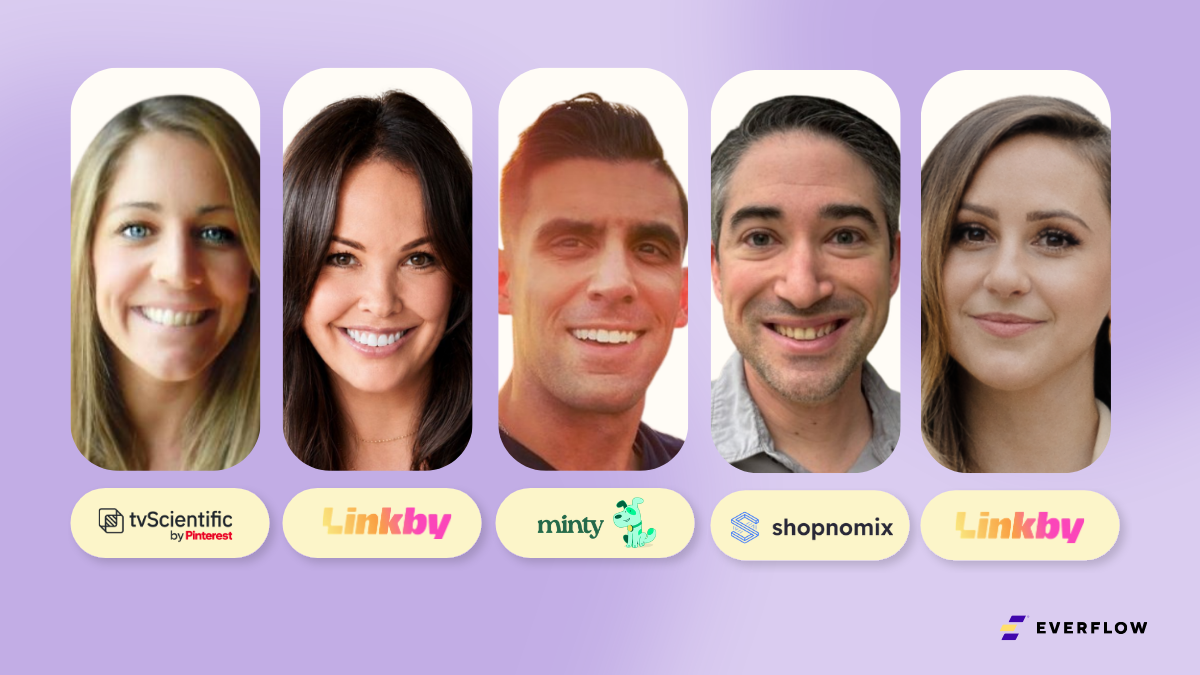
Vikki Danielson, Director of Affiliate Sales, tvScientific by Pinterest
Vanessa Lawrence, Chief Content Officer, Linkby
Chris Lettera, Partnerships Manager, Minty
Jeff Segall, EVP - Revenue Operations, Shopnomix
Sophie Toporoff, Director, North America Partnerships, Linkby


